Introduction
Visiting a Korean barbecue restaurant is one of the most memorable food experiences in South Korea.
However for first time visitors the experience can feel confusing or even intimidating.
The food is cooked at the table dishes are shared and ordering rules are different from many other countries.
Some restaurants have minimum order requirements and menus may not be fully explained in English.
This guide explains what to expect at a Korean barbecue restaurant so travelers can enjoy the experience with confidence and without stress.
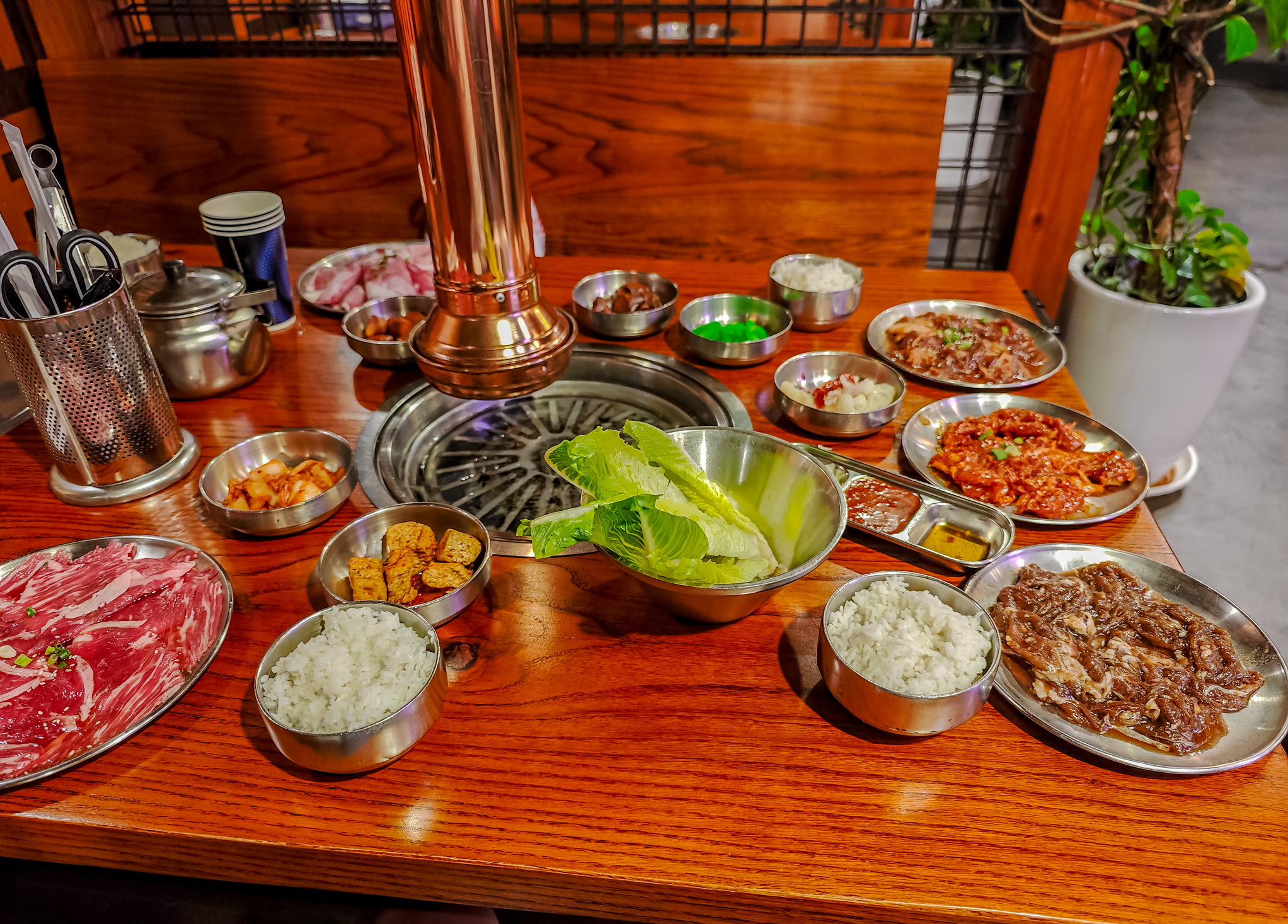
Before going to a barbecue place, it is useful to review basic Korean restaurant etiquette for tourists.
What makes Korean barbecue different
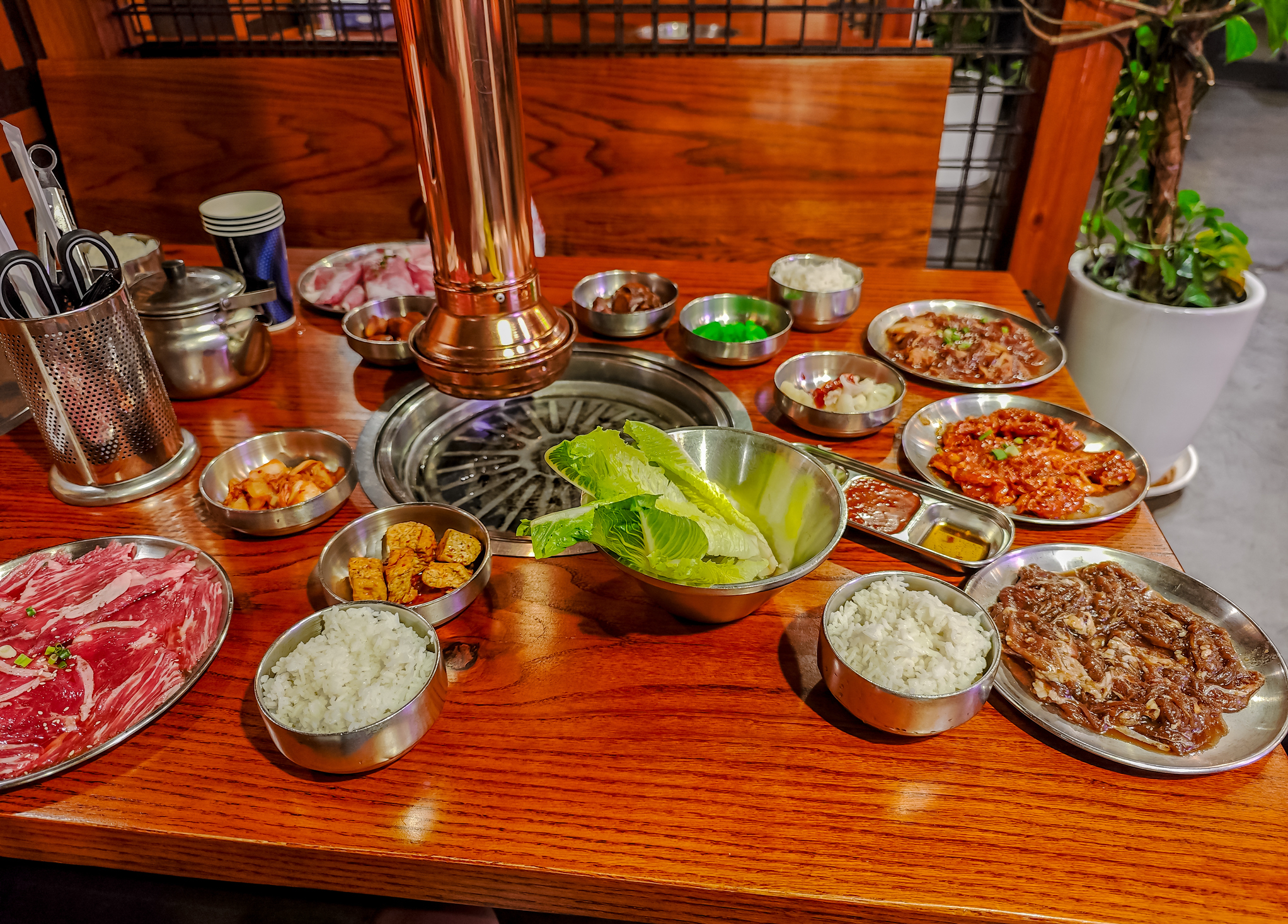
At a Korean barbecue restaurant raw meat is brought directly to your table.
Instead of being cooked in the kitchen the meat is grilled on a metal grill built into the table.
This means you take part in the cooking process.
The meal feels more social and interactive than a typical restaurant experience.
Most Korean barbecue restaurants specialize in a small number of meats rather than offering a long menu.
This focus helps maintain quality and consistency.
Understanding the menu before ordering
Korean barbecue menus usually list different cuts of meat instead of complete dishes.
Common options include pork belly marinated beef or thin sliced pork.
Side dishes vegetables and sauces are usually included automatically and do not need to be ordered separately.
Prices are listed per serving which can be confusing.
One serving does not always mean enough food for one person.
If the menu is unclear pointing at pictures or asking which items are popular is completely acceptable.
Minimum order rules explained
Many Korean barbecue restaurants require a minimum order of two servings of the same meat.
This rule applies even if you are dining alone.
It is not a special rule for tourists and locals follow it as well.
One serving refers to one plate of raw meat.
Depending on the cut, two servings may be enough for one person or shared between two people.
If you are unsure how much to order, asking the staff is fine and very common.
Cooking the meat at the table
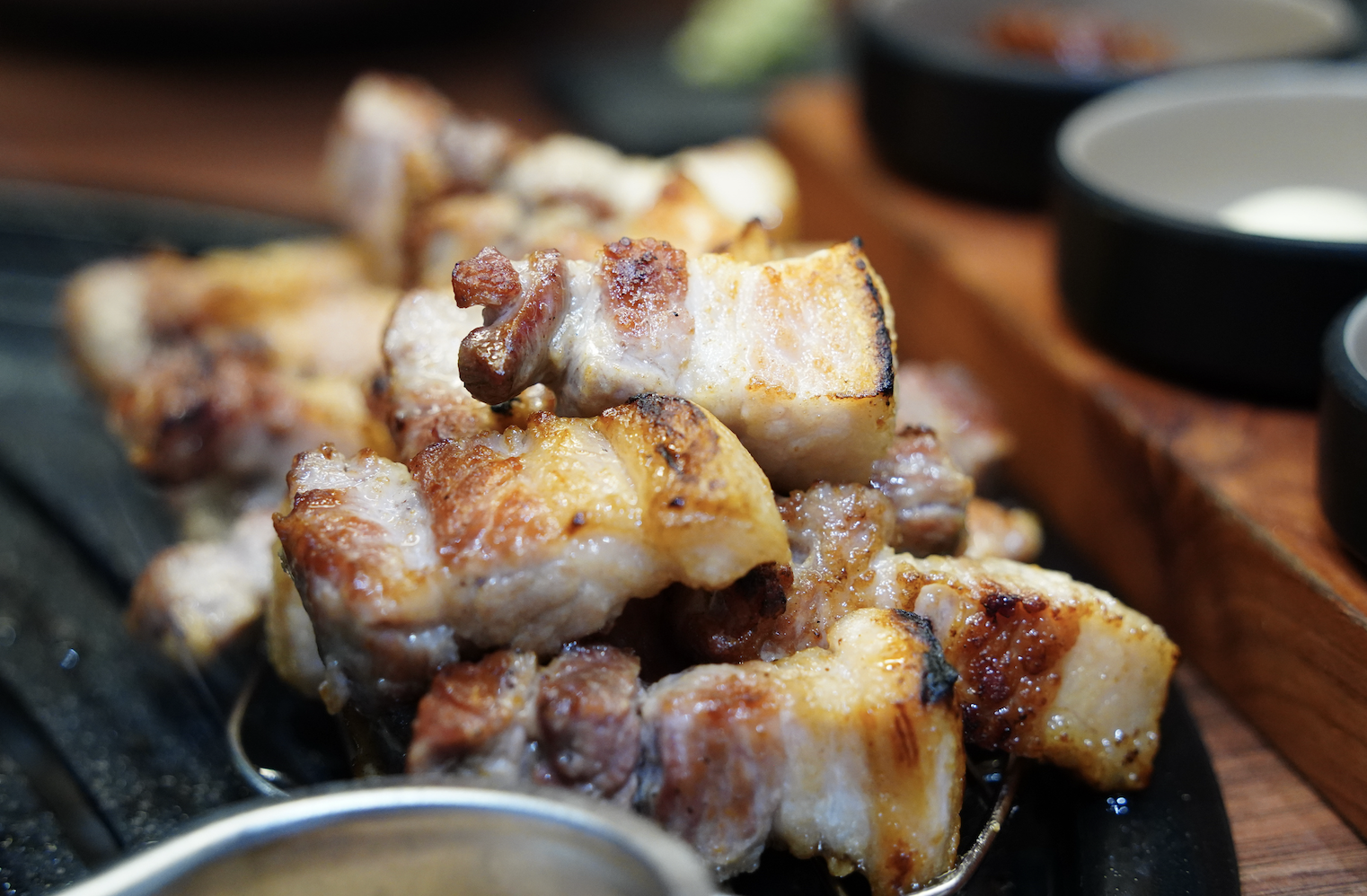
In many restaurants, staff will help cook the mea,t especially at the beginning of the meal.
They may place the meat on the grill, flip it, and cut it into smaller pieces using scissors.
This service is normal and does not require tipping.
If the staff do not assist, you can cook the meat yourself using the provided tongs and scissors.
Do not worry about cooking perfectly.
Korean barbecue is meant to be relaxed and enjoyable.
Side dishes sauces, and lettuce wraps
Along with the meat small side dishes called banchan are served.
These may include kimchi, pickled vegetables, seasoned sprouts or potatoes.
Banchan are shared by everyone at the table, and refills are usually free.
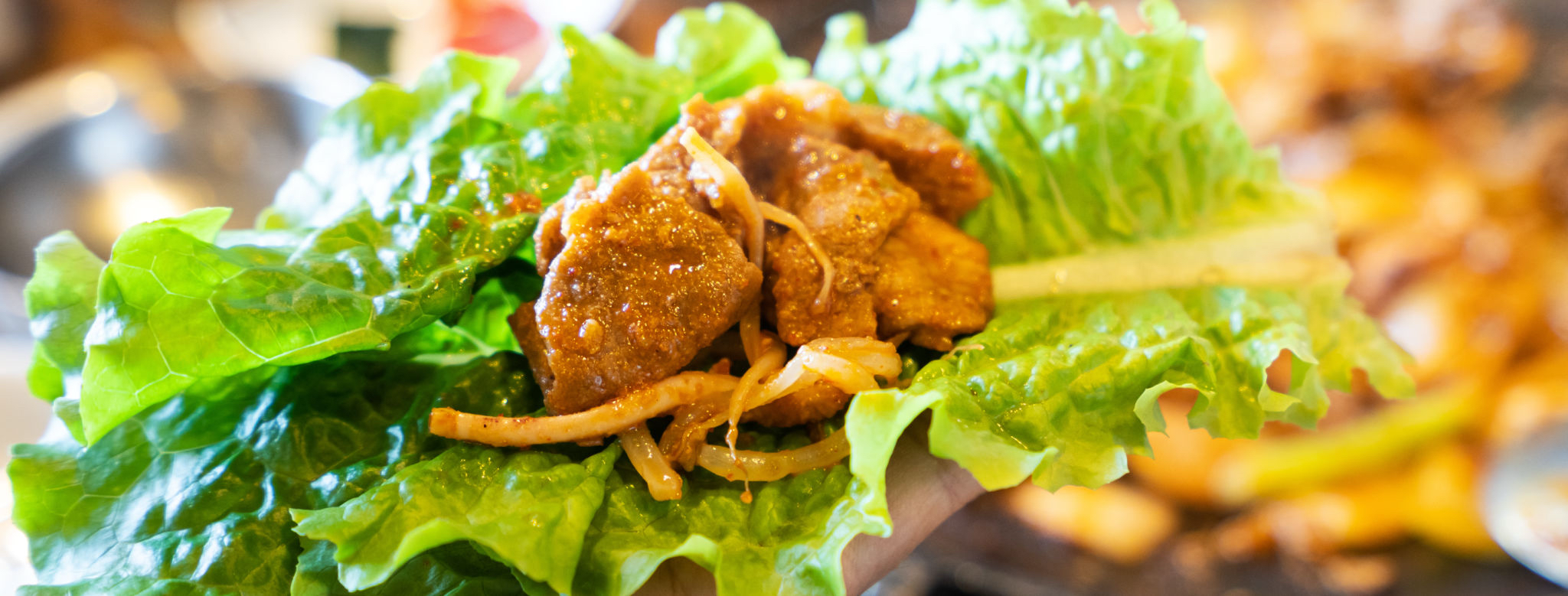
You will also receive lettuce leave,s sliced garlic, sauces, and sometimes green chili peppers.
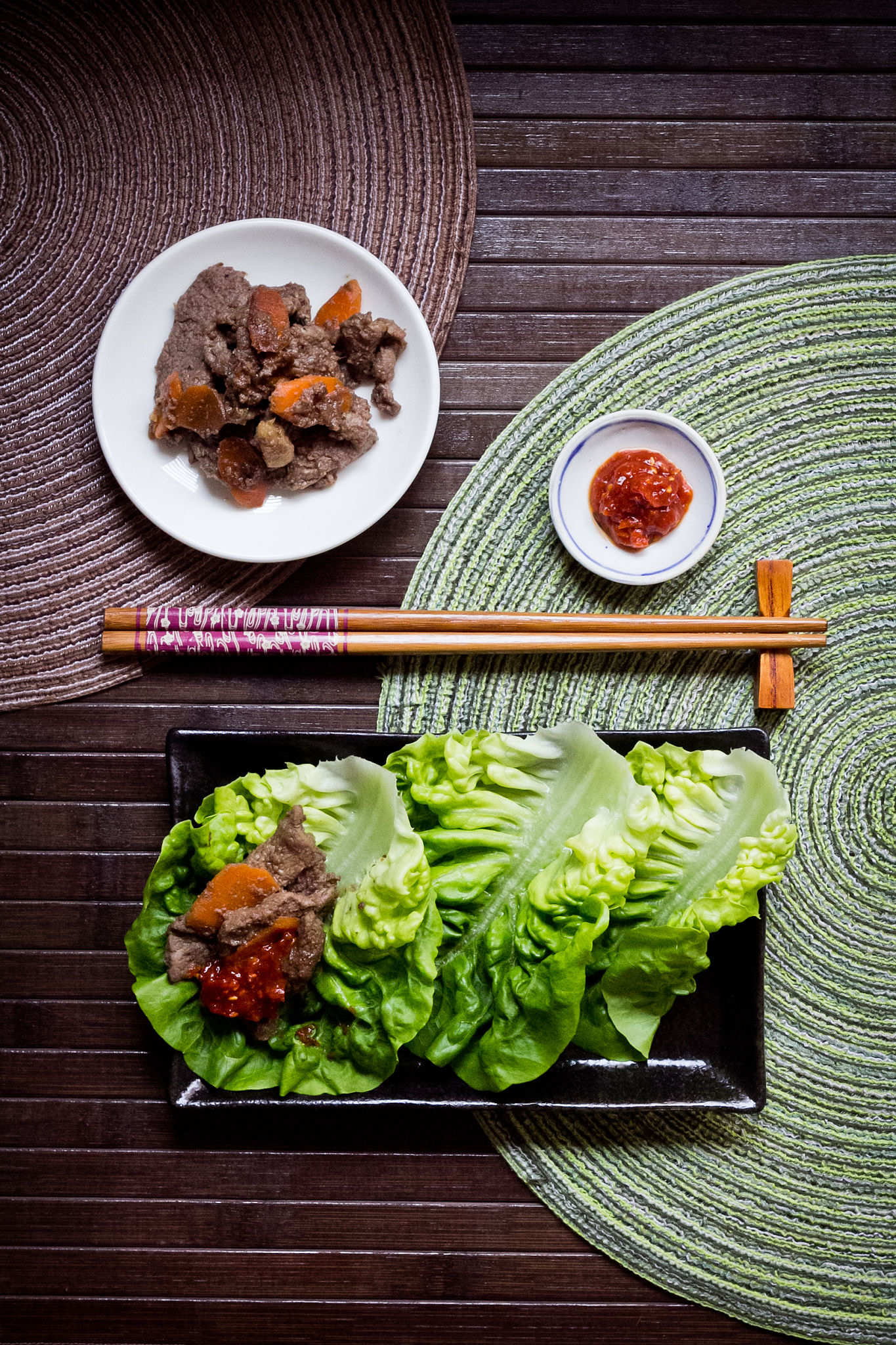
A common way to eat Korean barbecue is to place meat into a lettuce leaf, add sauce and side dishe,s then wrap and eat it in one bite.
This style of eating is called ssam.
Dining manners and etiquette
Korean barbecue restaurants are generally casual.
Sharing food is expected and normal. Everyone eats from the same grill and shares side dishes. Using your hands to eat lettuce wraps is acceptable.
Metal chopsticks and spoons are commonly used.
Tipping is not part of Korean dining culture and is not expected.
Drinking with Korean barbecue
Many people drink alcohol with Korean barbecue, but it is not required.
Water is always available and often self-service. Common drinks include soda, beer and soju.
If you do not drink alcohol, there is no pressure to order it.
Paying the bill
In most Korean barbecue restaurants payment is made at the counter near the exit.
You usually do not receive the bill at the table.
Staff will remember your table number or ask where you were seated.
Credit cards are widely accepted and cash is also commonly used.
Splitting the bill may be possible but many groups choose to pay together.
Is Korean barbecue suitable for solo travelers?
Korean barbecue can be challenging for solo travelers because of minimum order rules.
However some restaurants allow single diners during quiet hours.
There are also barbecue restaurants designed specifically for one person.
If dining alone feels uncomfortable choosing dishes like bulgogi without table grilling can be a good alternative.
Final thoughts
Korean barbecue is more than just a meal.
It is a social and cultural experience that reflects how people enjoy food together in Korea.
Understanding how ordering cooking and sharing work removes most of the confusion.
With this knowledge first time visitors can enjoy Korean barbecue with confidence.
You can also prepare by reading how to order food at a Korean restaurant.