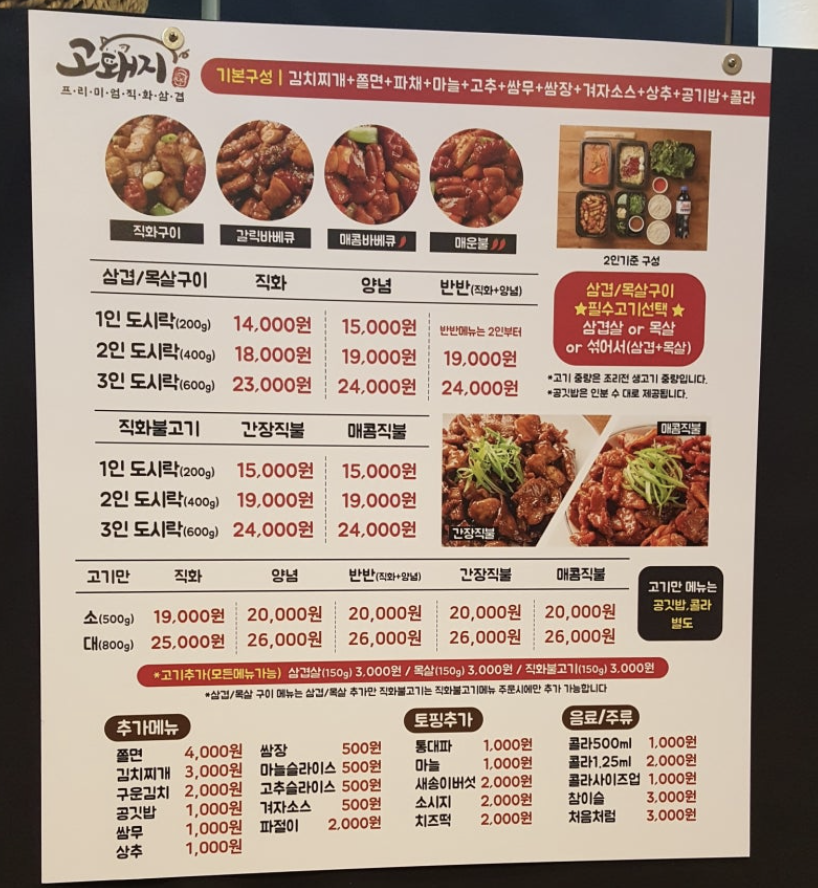
Reading a Korean menu can be one of the most stressful parts of eating out in South Korea for first time visitors. Many menus are written only in Korean, and even when English words appear, they often do not explain what the dish actually is. This guide explains how to read a Korean menu step by step so you can order food with confidence even if you do not speak Korean.
Why Korean menus look confusing at first
Most Korean restaurants specialize in one type of food, so menus often assume that customers already understand the basics. Instead of long descriptions, menus usually list dish names and prices only. This can be confusing for tourists who are unfamiliar with Korean food culture, but it also means the menu is simpler than it looks once you know what to focus on.
Understanding menu structure
Korean menus are usually organized by main dish type rather than by courses. You will often see one main section with several variations of the same dish. For example, a soup restaurant may list the same stew with different ingredients, while a barbecue restaurant lists different cuts of meat. Side dishes are almost always included automatically and do not need to be ordered from the menu.
Using photos on the wall or menu
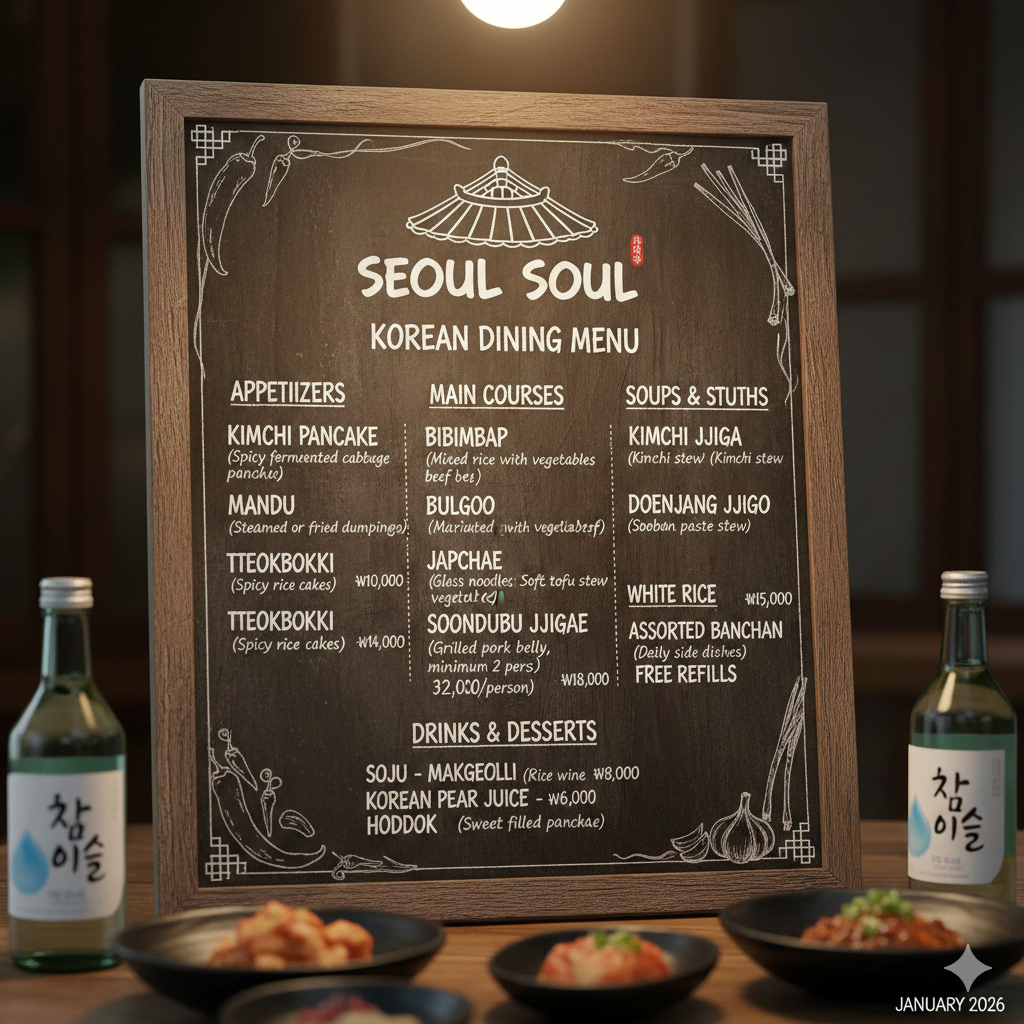
Many Korean restaurants display large photos of their food on the wall or near the entrance. These photos are often more helpful than the printed menu. If you see photos with prices next to them, those are usually the most popular items. Pointing at a photo and ordering that dish is completely normal and widely accepted.
After learning how to read a Korean menu, the next step is to understand how to order food at a Korean restaurant.
Recognizing common menu words
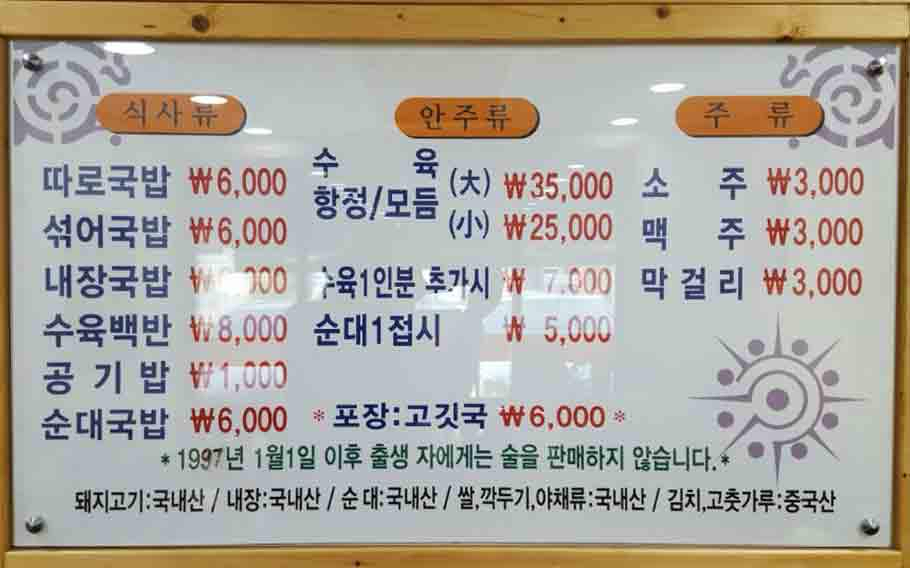
Even without knowing Korean, there are a few patterns that help. If you see the same word repeated many times, it usually refers to the main dish. Numbers next to the dish name often indicate portion size or number of servings. Words related to spice or portion size may also appear, but staff will usually confirm these details verbally when you order.
How to use a translation app effectively
Translation apps can be very helpful if used correctly. Instead of translating the entire menu at once, focus on individual dish names. Translating word by word is often more accurate than translating full sentences. If the translation still seems unclear, comparing it with photos online can help you understand what the dish looks like.
Asking staff for help without stress
You do not need perfect English or Korean to ask for help. Simple gestures like pointing at the menu and saying this one are enough. Staff are used to foreign customers and often recommend popular dishes. Asking which dish is most popular is a safe and effective way to choose.

Understanding prices and servings
Prices on Korean menus are usually listed per dish or per serving. In some restaurants, especially barbecue places, you may need to order at least two servings of the same item. This is normal and applies to everyone, not just tourists. If you are unsure how much food you will receive, it is fine to ask before ordering.
What not to worry about
Do not worry about pronunciation, making mistakes, or ordering the wrong thing. Korean dining culture is generally relaxed, and staff are patient with first-time visitors. Even if you order something unexpected, most dishes are meant to be shared and enjoyed casually.
Final thoughts
Reading a Korean menu becomes much easier once you understand how menus are structured and how restaurants operate. By focusing on photos, recognizing basic patterns, and using simple communication, you can order confidently without speaking Korean. With a little practice, menus that once felt intimidating will start to feel surprisingly simple.
If you are unsure what to pick from the menu, this guide to the best Korean food for beginners can help.